WEBEL LAW, PLLC
535 Fifth Avenue, Floor 4
New York, New York 10017
(646) 373-1055
WILLS & TRUSTS TERMS
DEFINITIONS
Below is an alphabetical list of Will and Trust terms. Click the plus sign to learn more about each.
Ab Intestato is Latin and refers to succession laws for property when a person dies without a valid Will.
See Trust Certificate.
See Unified Credit.
Beach Bum Trust Provision are placed in Trusts by the creator to encourage the beneficiary to acquire an education or to hold a job as
a condition for receiving distributions from the Trust.
See Trust Certificate.
Decedent refers to laws governing the estate of the person who has died.
Declaration of Trust is the document that establishes a Trust and generally names the Trustee,
beneficiaries, and other details about how the Trust is managed, ended, and more.
Domicile is a person's true, principal, and permanent home. That is, where a person intends to return, even if residing elsewhere.
A Durable Power of Attorney is a document where you do not wish to entrust specific
medical decisions to others. Instead, your decisions in narrowly defined situations are clearly
stated today for tomorrow's difficult decision. This arrangement works when you want to control
the decision or want to avoid placing the burden of making a difficult decision on a loved
one.
Estate is all real and personal property owned by a person before distribution via a Trust or Will.
Estate Tax (sometimes incorrectly referred to as Death Tax) is the taxation of property held by a person at the time of death. The tax
is levied on the estate before the property is distributed. The Federal Gift and Estate Taxes are linked and have about the same tax rate and
exclusion amount. Linking is intended to prevent tax avoidance by gifting before death or transferring after death.
Fiduciary Duty is a legal duty to act in a way that benefits someone else financially
Funding a Trust is transferring asset ownership into a Trust. Only assets owned by a Trust can take advantage of a Trust's unique
benefits, such as reducing taxes and avoiding Probate. Assets never transferred into a Trust are distributed via Probate.
General Power of Appointment is a legal authority a Trust or Will grants to decide to whom assets will be distributed. In comparison,
a Special Power of Appointment is the legal authority a Trust or Will grants to distribute assets to a select class subject to set limitations.
Generation-Skipping Transfer Tax is a tax applied to gifts made via Trusts to beneficiaries who are a generation younger (or 37 1/2
years younger) than the Trust creator. Dynasty Trusts remain an option for some Trust creators to avoid the Generation-Skipping Transfer Tax.
Gift Tax is a tax levied on any transfer made without receiving value in return and regardless of intent. The Federal Gift and Estate
Taxes are linked and have about the same tax rate and exclusion amount. Linking is intended to prevent tax avoidance by gifting before death
or transferring after death.
Grantee is the party who receives real property property interest by gift or sale. Grantor is the party who transfers the real property.
Grantor is a party that transfers real property interest by gift or sale. Grantors are subject to the Federal Gift Tax when transferring
assets without sufficient consideration. The party receiving the real property is the Grantee.
Healthcare Proxies (also known as Healthcare Directives) direct who is to make certain healthcare decisions when you are
unable to make those decisions yourself. Once
validly signed and executed, Healthcare Proxies remain in place unless revoked.
Healthcare Proxies allow you to make your own healthcare decisions while you can, but designates specifically the scenarios when someone
else is designated to decide for you when you can't and names the person to make your decisions.
Healthcare Proxies become more important as you age when medical situations
become more complex and your decision-making ability may decline. Having
a Healthcare Proxies in place before the need arises ensures that your wishes are considered,
as previously discussed with your named decision-maker.
Inter Vivos Gift is made during the life of the person giving the gift. In contrast, a Testamentary Transfer or Gift is made in
a Will after the death of the person giving the gift.
Intestate refers to the state law regarding the distribution of a person's assets when the person dies without a valid Will.
Life Estate is an interest in land that grants the holder the right to possess it only for the life of the holder. The holder can transfer
the right but cannot engage in an activity that wastes the land or prevents the next person from having full use.
See Revocable Trusts.
Marital Deduction is the exception that allows transfers to a spouse to be free of any Gift or Estate taxes.
See Trust Certificate.
Private Foundations are funds created to promote charitable, religious, educational, research, or other benevolent purposes.
Property Control Trusts limit the beneficiary's rights to assets owned by the trust to protect from wasteful spending, manipulation by
unscrupulous people, and other acts that may cause a loss to the trust's assets or income. Examples include Special Needs Trusts,
Spendthrift Trusts, and Sprinkling Trusts.
Estate tax is the taxation of a person's property transferred to beneficiaries at the person's death. Gift tax is the taxation of a person's
property transferred during the person's life. The Federal Estate Tax is integrated with the Federal Gift Tax, so they are both around 40 percent
and have similar exclusions. Therefore, individuals cannot transfer property during life or death and avoid a 40 percent tax. However, a
Qualified Terminable Interest Property Trust (QTIP) by allowing spouses to maximize their Unified Credit.
The Unified Credit (also known as the Applicable Exclusion Amount) allows gifts and property transfers to be exempted from gift and estate taxation.
The value of the gifts and transfers allowed tax-free was set at about $11.2 million in 2018 and is adjusted annually for inflation. However, the Unified
Credit is currently set to drop to $5 million (plus adjustments for inflation) in 2026.
Property transfers between spouses don't trigger gift or estate taxes, so transferring assets may temporarily be a tax-saving strategy. Alone, spousal transfers only
partially avoid estate taxes because the spouse receiving the property will eventually incur one of the two taxes.
Qualified Terminable Interest Property Trusts (QTIP) allow couples to maximize their Unified Credit amounts while qualifying for their full marital deduction.
Remainder is the trust property that exists after specific devices are given to named beneficiaries.
Revocable Living Trusts allow a living settlor to end the trust and reclaim the trust's assets. If the settlor never reclaims trust
property, upon his or her death the trust becomes irrevocable.
Rule Against Perpetuities is a common law rule that no interest in land is good unless it vests no later than 21 years after a life in being
at the creation of the interest.
Settlor is the party that creates a trust and usually gifts assets to it.
Special Power of Appointment is the legal authority granted by a Trust or Will to distribute assets to a select class subject to set
limitations. In comparison, a
General Power of Appointment is a legal authority a Trust or Will grants to decide to whom assets will be distributed.
Successor Trustee is the person or entity that takes over as Trustee for a Living Trust when the original Trustee dies or becomes incapacitated.
Testamentary Transfer or Gift is made in a Will after the death of the person giving the gift. In contrast, an Inter Vivos Gift is
made during the life of the person giving the gift.
Testamentary Trusts are created in a Will when the testator dies.
Testator is the person who died and left a Will.
Trust is a formal legal document that holds legal title to assets given by a Settlor and employs a Trustee with a fiduciary responsibility
to manage the assets while the benefits of the assets go to the beneficiaries.
Trust Administration includes managing a trust's principal, distributing assets, and filing and paying taxes.
Trust Certificate (also known as Abstract of Trust, Certificate of Trust, Certification of Trust, or Memorandum of
Trust) is a brief version of a trust used as proof of the trust without listing certain confidential details, such as the names of the beneficiaries.
Trust Corpus is the "body" of the trust. "Corpus" is Latin for "body."
Trust Declaration is a binding written or oral statement that appoints a trustee to manage assets for the benefit of a third party.
Unified Credit combines the two separate lifetime tax exemptions for Gift Taxes and Estate Taxes. Because Inter Vivos (during life)
Gifts and Testamentary (after death) Transfers are taxed at the same rate, so the IRS combines the amount of both that are excluded from
taxation. A taxpayer can transfer up to 100 percent of the current excluded dollar amount either during life or after death (or some of both)
tax-free. Therefore, transfers are taxed equally, whether made during life or after death, and no tax benefit exists for making transfers before or after death.
See Unified Credit.
See Unified Credit.
See Unified Credit.
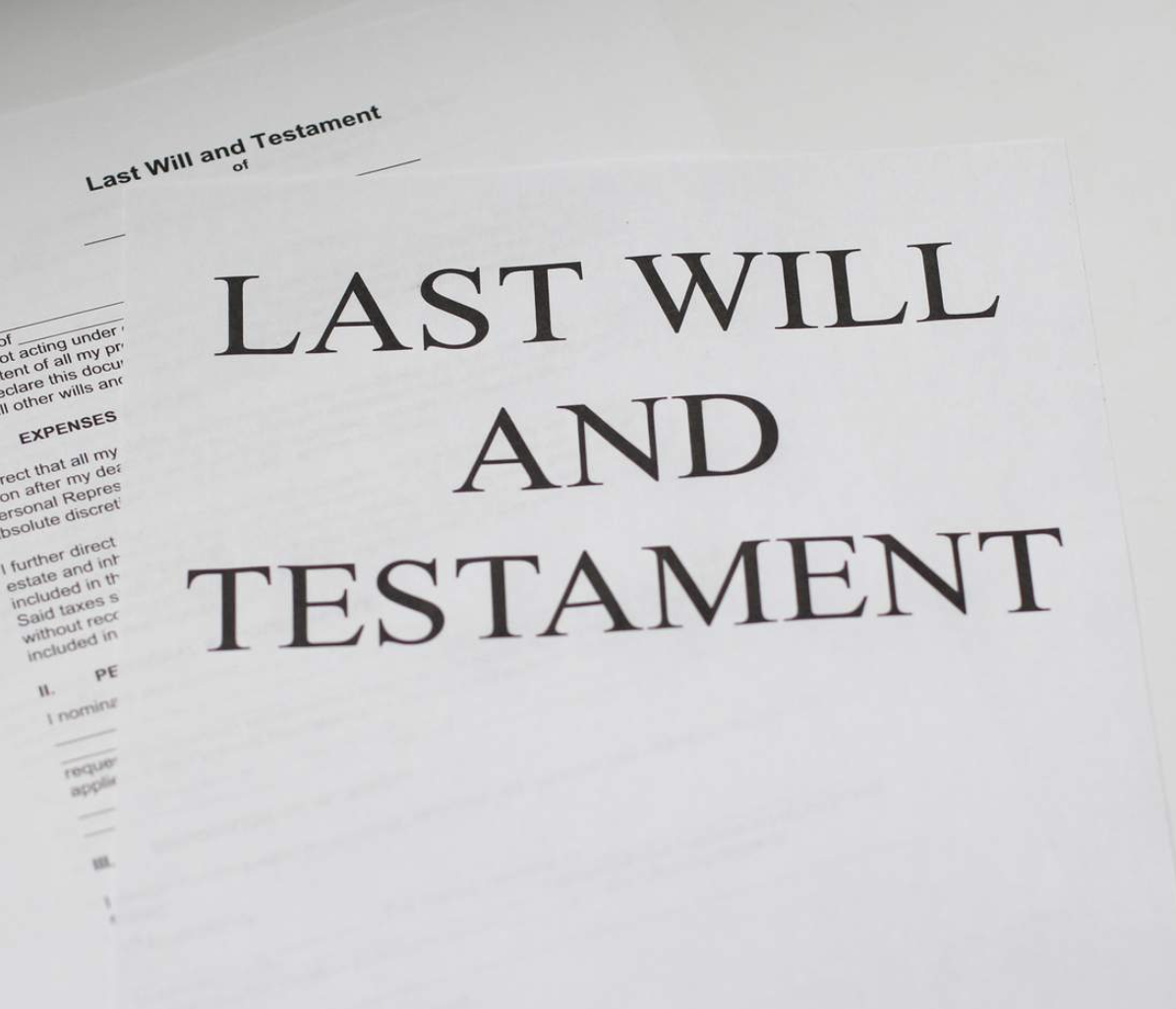
A Will is a legal document created by competent adults to state their final wishes and instructions for distributing their estate after
death. A Will prevents a decedent's property distribution by the State's intestacy statute. To be valid, a Will must comply with the State law
where the Testator is domiciled at the time of the Will's signing or death. Wills must go through Probate. Some Trusts are an
alternative to the Probate process and expense.